Closing the digital infrastructure gap in India's coastal shipping
September 2026


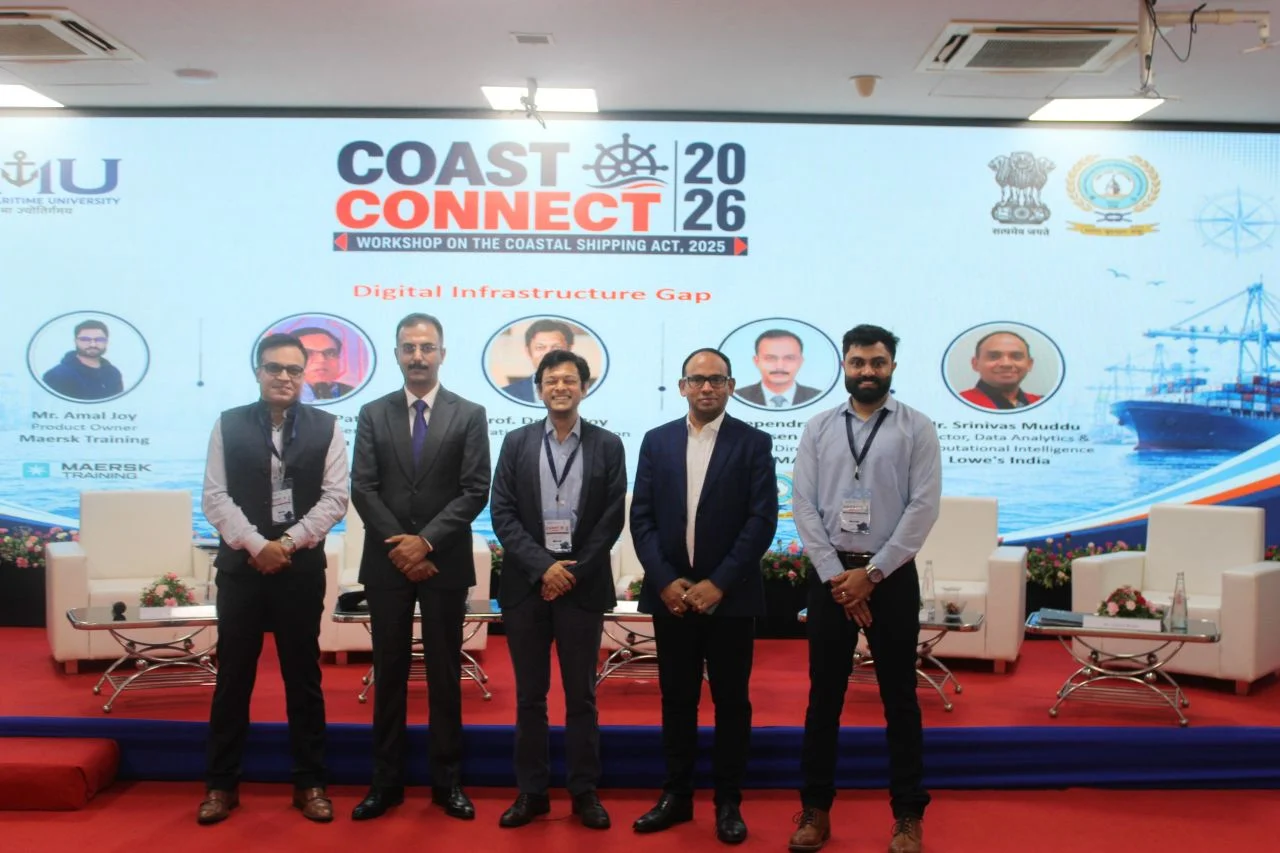
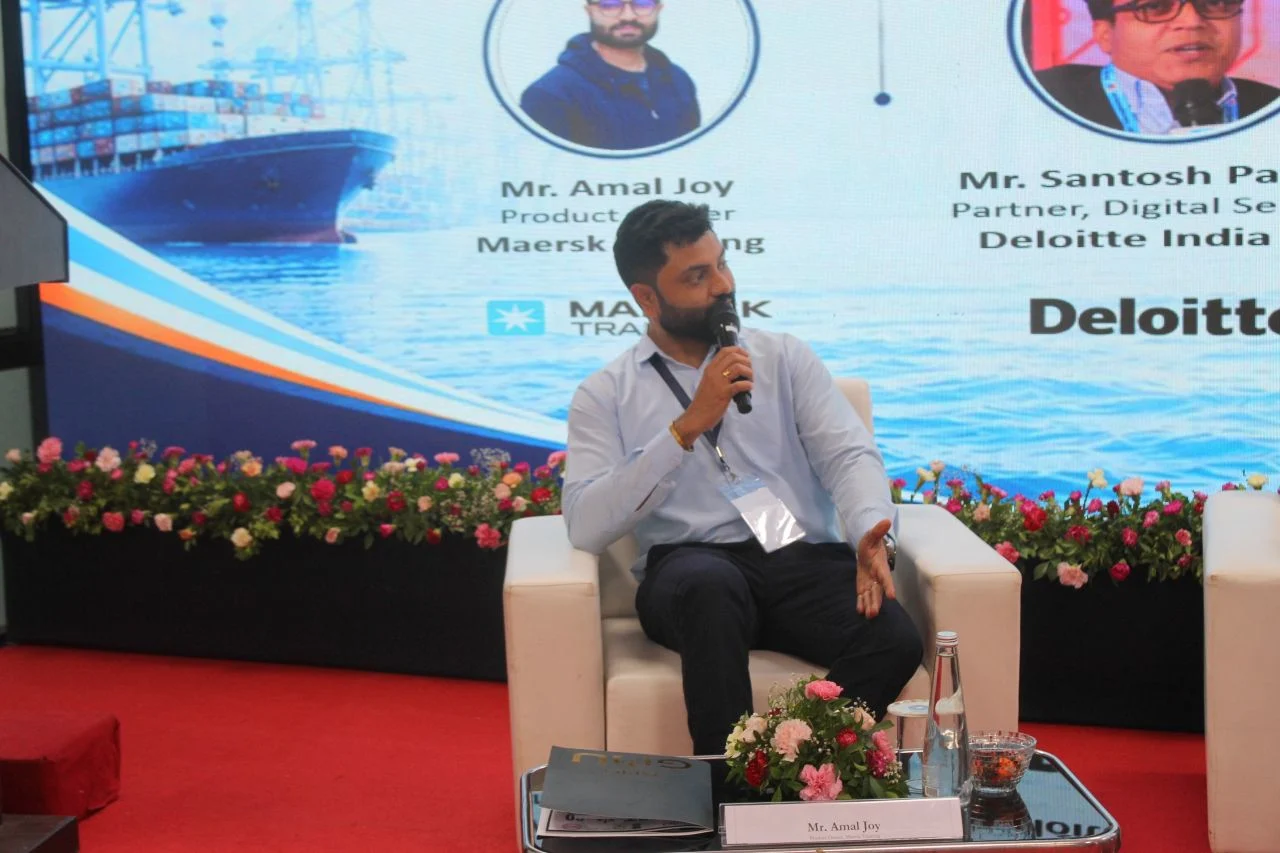
This article follows the author's participation on the Digital Infrastructure Gap panel at the Gujarat Maritime University's Coast Connect 2026. A big thank you to GMU for driving these crucial conversations and hosting a fantastic event. Always energizing to return to campus and trade ideas with the minds shaping the sector’s future.
Advanced technology means very little if the infrastructure beneath it cannot support it on the ground. That was the point I kept coming back to on a recent panel on the Digital Infrastructure Gap at Coast Connect 2026, and it framed most of what we discussed: coastal shipping is well positioned to become a genuinely competitive pillar of India's multimodal logistics network, but the gap between deploying new technology and being ready to use it well is still wide.
I was joined on the panel by Prof. Debjit Roy from IIM Ahmedabad, Mr. Deependra Singh Bisen from the DG Maritime Administration, Mr. Srinivas Muddu from Lowe's India, and Mr. Santosh Pathak from Deloitte India LLP – a genuine mix of regulatory, academic, industry, and technology perspectives in one room. That mix mattered, because the gap we were there to talk about does not sit neatly inside any one of those domains.
The ‘Lockstep’ principle
Our shared conclusion on the panel was that technology deployment alone does not guarantee change on the ground. Real progress happens only when physical infrastructure readiness, system accessibility, and operational skills move together. Advance one without the others and the gap simply moves rather than closes. A platform that operators have not been trained to use delivers little more than the legacy system it replaced.
I find this a useful discipline to apply beyond the panel room. Before backing any digital initiative in this sector, I ask myself whether infrastructure, access, and skills are genuinely being planned to land at the same time, rather than treating training or connectivity as something to be sorted out after the platform has already gone live. In my experience, that sequencing decision is often what separates a pilot that sticks from one that quietly gets shelved a year later.
My fellow panellists also raised two conditions I think need to sit alongside this: wider access to maritime data and digital testbeds for academic researchers, so that solutions are engineered against real bottlenecks rather than assumptions, and more transparent, predictable regulatory frameworks, so that operators and technology providers can plan investment with confidence.
Preparing the workforce for a digital deck
This is the piece I engage with most directly in my own work, and the one I was on the panel to represent. None of the rest of it matters if the people operating these systems are not equipped to use them. Cutting-edge digital tools are only as effective as the seafarers and shore-based professionals managing them day to day, and that capability does not appear on its own.
In my view, focused investment in simulation, digital upskilling, and practical training needs to earn its place alongside investment in the technology itself. Immersive training environments, in particular, let seafarers and shore personnel build familiarity with digital workflows before they encounter them in live operations, which matters in a sector where the margin for error is thin. A crew member who has already navigated a new digital bridge system, a new cargo-monitoring dashboard, or a new remote-inspection tool in a simulated environment brings far more confidence – and far fewer costly mistakes – to the first time they touch the real thing.
This is also where I think the workforce conversation tends to get compressed too quickly into a single line item. Digital upskilling is not one training session bolted onto a technology rollout; it is an ongoing capability that needs refreshing as systems change, much like any other operational competency. Workforce enablement should be treated as a parallel workstream to infrastructure rollout, planned and budgeted alongside it from day one, not an afterthought once the technology is already in place.
Four pillars, one direction
One thing I left the panel more convinced of: bridging this divide is not something any single organisation can do alone. It takes deliberate alignment across regulators, academia and research, industry operators, and technology providers. Each solving a different part of the same problem. Conversations like this one are useful precisely because they force those perspectives into the same room, and because they surface, quite quickly, where each group is depending on progress from the others.
One of the more energising parts of the day for me came from the audience rather than the panel: students at GMU were less interested in theoretical solutions and more interested in how the sector actually intends to fix the underlying plumbing. That kind of pressure from the next generation of maritime talent is, I think, exactly what keeps conversations like this one honest. If infrastructure, accessibility, and skills are the three things that need to move together, which one would you say is furthest behind in your part of the sector today?
References
-
Coast Connect 2026, Gujarat Maritime University (GMU), Gandhinagar — Track C: "Digital Infrastructure Gap" panel discussion
-
Directorate General of Shipping, Government of India – coastal shipping policy and regulatory framework publications
-
International Maritime Organization (IMO) – guidance on digitalisation and e-navigation in maritime operations
-
Deloitte India LLP – insights on digital transformation in Indian logistics and maritime infrastructure