Maersk Training supports launch of AI-powered VR courtroom simulation for maritime law education
March 2026

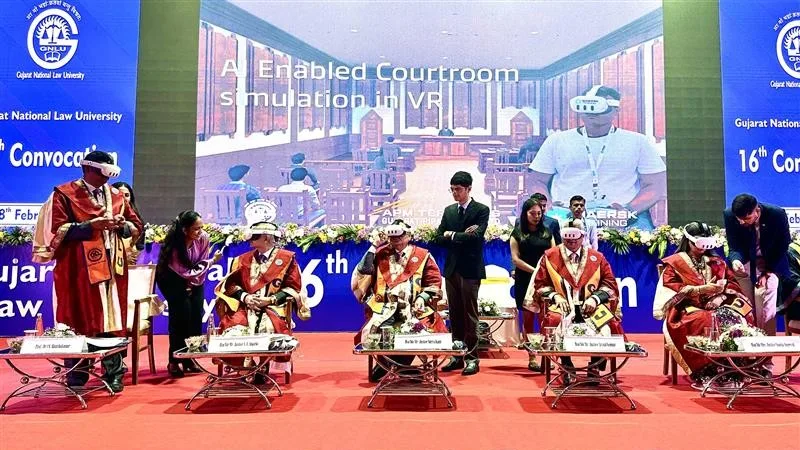
Gujarat, India – A first-of-its-kind AI enabled virtual reality courtroom simulation has been introduced, offering an immersive way to learn maritime law. The programme places learners inside a fully interactive courtroom where they can practise advocacy, evidence presentation, judicial engagement and legal reasoning in high stakes scenarios. It moves legal training from theory to hands‑on experience.
Unveiled at the Sixteenth Convocation Ceremony of Gujarat National Law University, the initiative is supported by APM Terminals Pipavav through its Corporate Social Responsibility efforts and developed by Maersk Training for Gujarat Maritime University. While relevant across legal fields, it also supports complex maritime disputes and sector‑specific case work.
The ceremony was attended by the Hon. Chief Justice of India, Surya Kant, together with judges from the Supreme Court of India and the High Court of Gujarat.
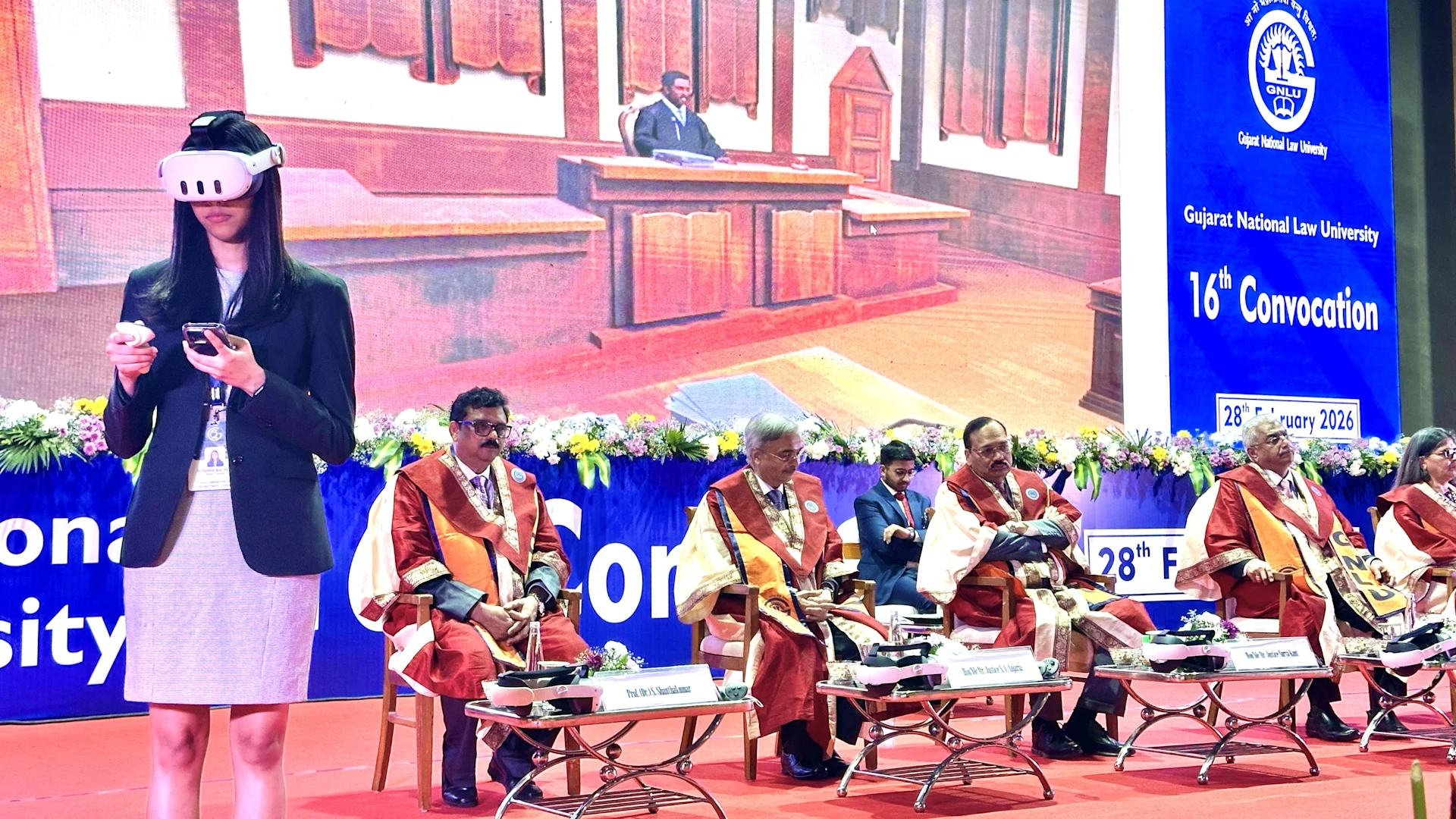
The AI enabled VR courtroom offers an immersive environment where students engage with realistic scenarios covering maritime law, arbitration and alternative dispute resolution. It helps close the gap between classroom learning and real‑world application by building skills needed in a changing legal landscape.
Through this initiative, APM Terminals Pipavav and Maersk Training continue to strengthen institutional capacity across Gujarat’s maritime and legal education ecosystem. The collaboration reflects a shared focus on innovation‑driven learning and structured academic–industry partnerships that support the state’s maritime sector.
Speaking at the ceremony, Hon. Chief Justice of India, Surya Kant, stated: “I am truly impressed with this idea. It holds significant potential in strengthening the practical exposure of lawyers, and I can clearly see a strong and promising future for this.”
Girish Aggarwal, Managing Director of APM Terminals Pipavav, said, “As India’s maritime sector continues to expand in scale and complexity, the integration of advanced digital and AI-driven capabilities is no longer optional, it is foundational.”
Col. Ankur Vashishtha, CSR Head of APM Terminals Pipavav, added: “Supporting education and skill development is a key pillar of our CSR philosophy. We are pleased to contribute to an innovative learning platform that equips students with practical exposure and future-oriented competencies for the maritime and legal sectors.”
Prof. (Dr.) Sanjeevi Shanthakumar, Director and Vice Chancellor of Gujarat National Law University, commented: “The integration of AI-enabled virtual reality tools into legal education represents an important step towards experiential and practice-oriented learning.”
Amal Joy, Maersk Training’s Product Owner for Immersive Technologies, added: “This initiative shows a strong commitment to skill development across the maritime value chain. The AI powered VR courtroom highlights how effective collaboration and technical expertise can advance learning, and how shared purpose between institutions and industry can drive meaningful innovation.”

The programme gives maritime law students experience‑based learning rooted in real operations such as port infrastructure, vessel incidents, safety issues, charter party disputes and liability cases. Students argue cases, examine witnesses, present evidence and manage procedure while an adaptive AI engine adjusts complexity as their skills grow. This builds legal reasoning under pressure, procedural accuracy, advocacy confidence and operational awareness, offering insight into how port and vessel decisions shape legal outcomes.
Drawing on Maersk Training’s long history in simulation‑based training for seafarers, port operators and offshore crews, the same principles now extend into the legal domain, setting a new standard for preparing future maritime lawyers.