Readiness is a capability built in stages, not switched on
October 2026

Knut Egil Sæther
Principal Advisor for Crisis Management

Vidar Gade
General Manager ‑ Crisis Management & SIM
Foreword
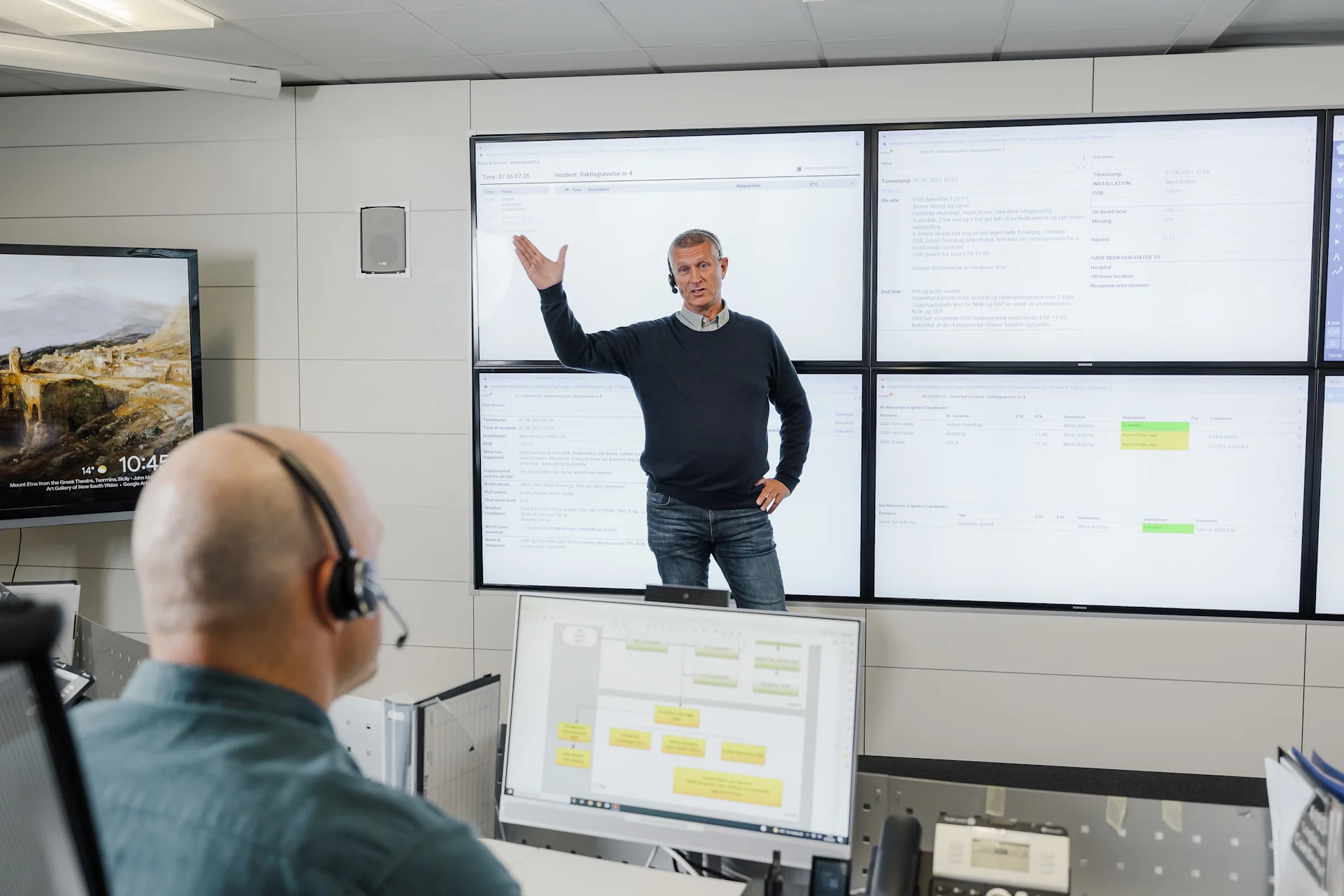
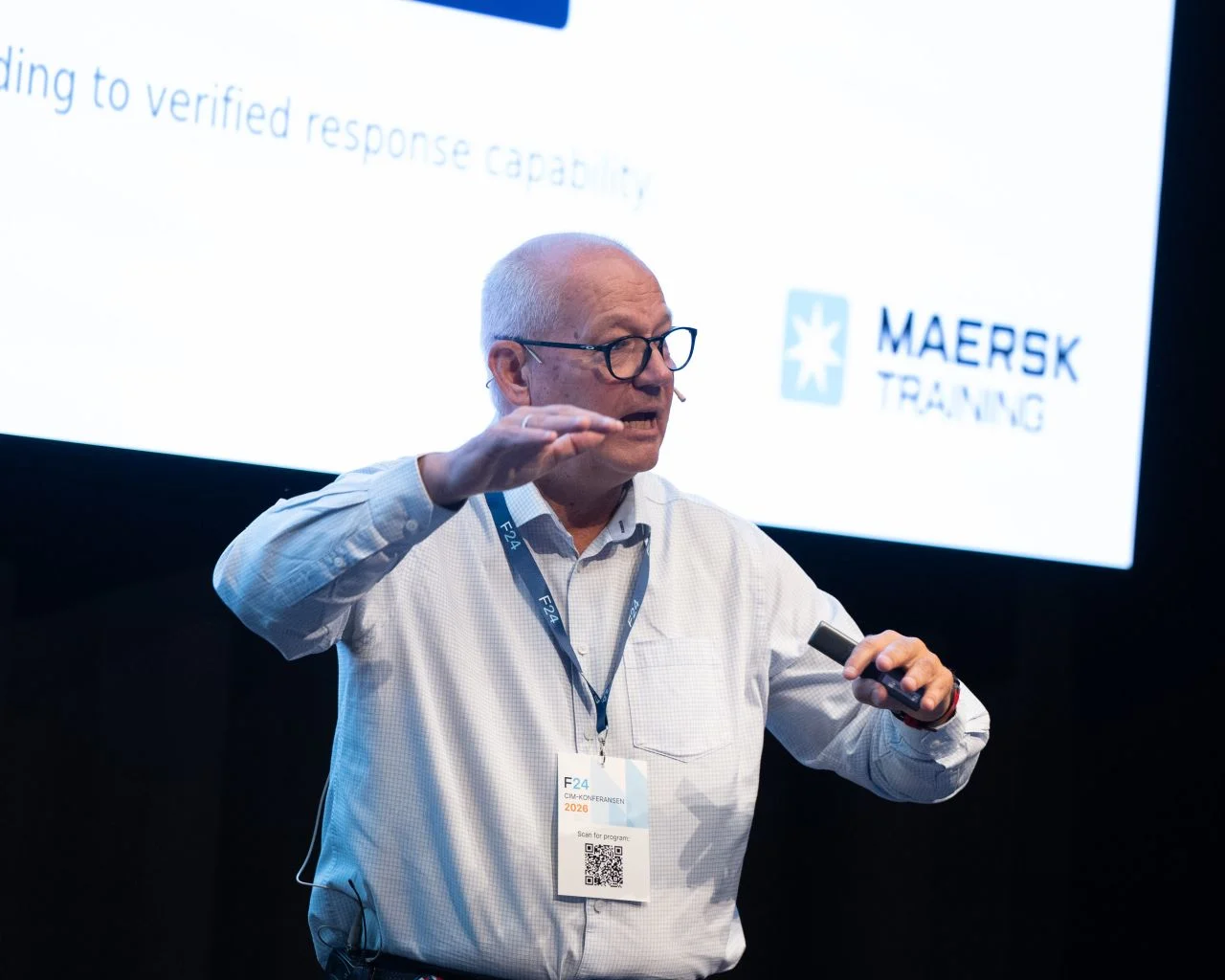
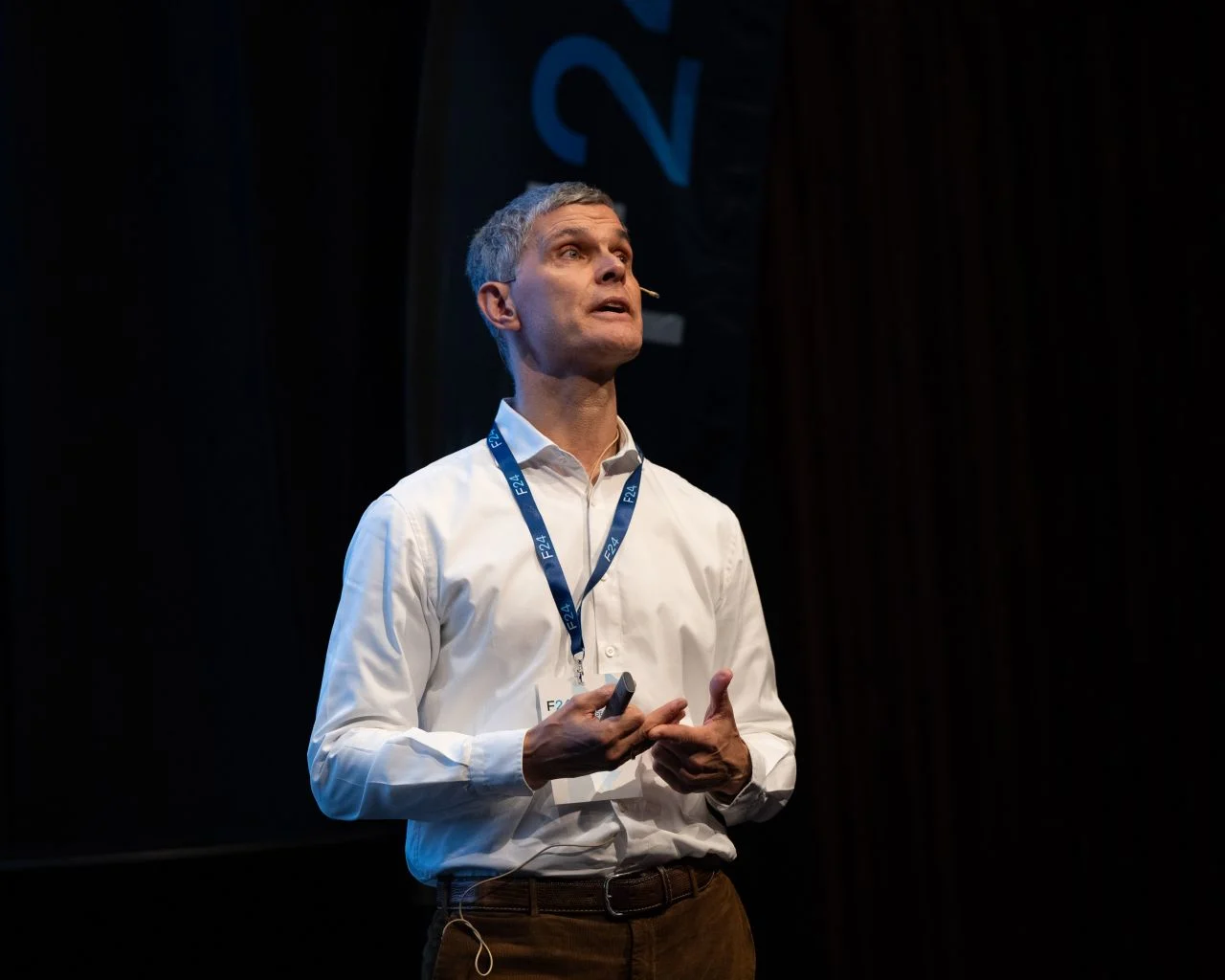
At the 2026 F24 Nordics Forum on Crisis Management and Business Continuity, Vidar Gade and Knut Egil Sæther gave a joint lecture on training, exercising, and preparing emergency personnel, and used the session to demonstrate how Crisis Information Management is built into our training concept. The two spent two good days with a room full of emergency preparedness professionals, and this article brings together what they covered.
Start with learning, not testing
A cost-effective approach to preparedness has a clear order. It starts with learning. People need to understand the concepts, the roles, and the tools before they can be expected to use them under pressure. Skipping this step and moving straight to exercises is one of the most common ways organisations waste their training budget. An exercise only tests what people already know. It cannot teach it.
The progression runs through five stages:
-
Foundation: basic emergency response and regulatory context
-
Role competence: function training, including the CIM tool
-
Team integration: talk-throughs and tabletops
-
Execution: simulation with live input and response
-
Verification: a full-scale exercise, followed by an after action review
Each stage depends on the one before it. An organisation that jumps to exercises before its people have role competence is testing a gap it already knows exists.
Exercises test the organisation, not the individual
Exercises serve a different purpose to training. Their job is to test whether the organisation, not just the people in it, can perform under the pressure of an emergency response or crisis management situation. In our programmes, this typically makes up around ten percent of the overall effort, with the remaining ninety percent spent building the underlying competence. That balance is deliberate. Most of the value comes from training. Exercises confirm that competence holds together when roles interact, information is incomplete, and decisions have to be made quickly.
This is also why exercises should be sequenced. A talk-through or tabletop tests understanding of a plan in a low-pressure setting. A full-scale exercise, with simulation and live input, tests whether that plan survives contact with something closer to a real event.
Training top management means training for strategy, not operations
In Knut Egil's view – and reiterating his insights from last year’s forum – the top management level requires a different kind of training to the operational and tactical levels. Top management is not there to manage the incident itself. Its job is to manage the strategic consequences, protecting the company, its reputation, and its relationships with stakeholders while the incident is being handled elsewhere in the organisation.
This is where a Crisis Information Management tool becomes central to the training. Rather than working from static documents, top management teams use CIM to keep a shared, structured picture of the situation, current actions, and open decisions.
This keeps the focus where it belongs at that level:
-
Situation awareness across the current state of the incident
-
Objectives and priorities at strategic level
-
Stakeholder and reputation management
-
Communication strategy, including key messages and channels
Training top management this way also changes what a crisis management plan needs to be. It has to be described, then verified through a walkthrough or talkthrough, then tested through exercises, with the plan adjusted based on what that testing reveals. A plan that has never been tested against a live scenario is a draft, not a capability.
A trained team and a ready organisation are not the same thing. Training builds the people. Exercising proves that those people, working together across strategic, tactical, and operational levels, can hold together under real pressure. Skipping stages or treating a crisis management plan as finished once it's written, leaves that gap untested until an actual incident finds it.
Closing that gap takes the same discipline in every organisation: learning first, practice second, and exercises that genuinely test whether the plan holds, all the way up to the strategic level.