Tom Milburn: built through the business with the customer at the centre
July 2026

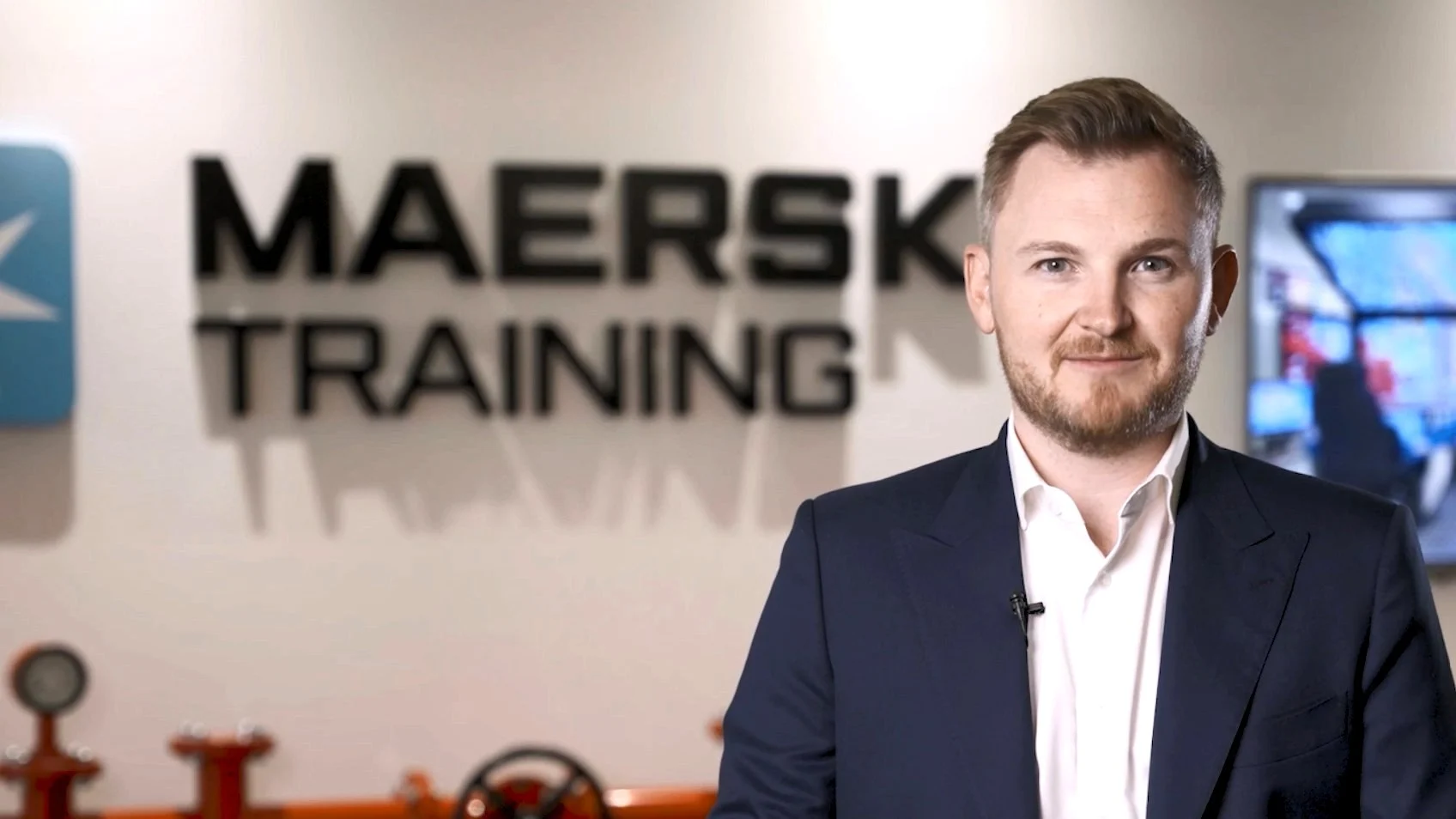
Built through the business
Tom Milburn’s career has not been defined by a single role. It has been defined by all of them. As Chief Commercial Officer at Maersk Training, he has progressed through every position in the Sales Department, and he is quick to say that this is the experience that shapes how he shows up today.
“I’ve had the privilege of progressing through the organisation and doing every role in the Sales Department. It helps me understand the challenges our customers and our internal teams face, and it gives me an insight into how we can achieve our collective goals and the direction our industry is heading.”
Tom does not point to one role as the turning point. He points to the cumulative effect. Years of moving up through the function, picking up a fuller picture each time, until the lens itself has changed.
What carries through, in his telling, is a single instinct. The priority sits with the customer. Understanding their challenges, and the potential consequences of those challenges, is what helps him balance internal pressure with external reality, without one drowning out the other.
Lessons that have stayed
Ask Tom what has shaped how he leads today, and the answer is a short list of habits he keeps returning to.
“Sounds cliché, but listen to understand, not to respond. Something I’ll never perfect, but I get better at it constantly.”
Alongside listening, four threads recur. Be clear with people, regardless of the nature of the conversation. It makes everything easier afterwards. Treat stakeholder management, internal or external, as critical to success. And trust marginal improvements over heroics.
That last one is more philosophy than tactic. Consistency, he says, is the most sustainable way to improve at anything – in sales, in leadership, in life. The small daily compound is the bit most people underestimate.
Translating strategy into focus
As CCO, Tom’s remit is to break the company’s strategy down into a clear go-to-market approach, and to make sure customers’ needs sit at the centre of how the commercial organisation operates. He works closely with clients and with his Heads of Commercial and Account Managers, moving between tenders, proposals, market developments and the conversations that connect them.
He is honest about the rhythm of the role.
“Unfortunately, too many Teams meetings. But in seriousness – meeting with our customers, and with our Heads of Commercial and Account Managers to discuss proposals, tenders and market developments.”
Keeping a global team aligned across regions and time zones, he says, comes down to one thing: clarity of purpose. Keep things as simple as possible, and people understand what is expected and what matters right now.
Simple, though, is not the same as uniform. It is easy in a global business to assume every market behaves the same way. Tom is firm that they do not. Each customer, industry and market has its own dynamics, and what works in one place will not always work in another. Respecting those local realities is part of the job, not an exception to it.
How decisions get made
When priorities compete, his answer is short.
“Simple. What’s most important for the customer.”
For the balance between the urgent and the important, he leans on a tool his wife introduced him to a long time ago: the Eisenhower Matrix. It helps him sort what really matters when the day is pulling in every direction at once.
When it comes to planning, he watches investment activity more than headline trends. Production increases. New fuel types for marine vessels. Auctions for wind farms. M&A activity. The regulations and standards moving alongside all of them. Together, those signals tell him where the industry is actually putting its money, and therefore where Maersk Training needs to invest its time and resource to capitalise.
Where the opportunities are
Looking ahead, Tom sees two areas with real potential: digitalisation, and the evolution of training towards a more continuous demonstration of competence. Both, in his view, point to a future where training is less a single moment in time and more an ongoing capability that customers can prove, repeat and build on.
His measure of progress, meanwhile, has shifted over the years. It is no longer about output for its own sake, or about hitting one specific number on one specific day.
“Some time ago I would probably have given a different answer. But personally, I think maximising what you can do on any given day is the best you can do. We all have good days, bad days, long days and tough situations. So, all you can ask of yourself and others is – did you get the maximum you felt you could give today?”
It is a quietly demanding standard. It does not let anyone off the hook on a good day. It also does not punish them on a hard one. It just asks the same honest question, every day.
Outside the office
Most of Tom’s time outside work right now is going to one thing. He has just become a father, and that is taking up the majority of the rest of the clock.
“I’ve just become a father, so that’s taking up the majority of my time right now. All going well so far.”
Before fatherhood, golf, the gym and squash were how he switched off. To reset and stay curious, he leans on long-form interviews and podcasts – easier, he admits, than picking up a brand-new skill from scratch. A recent favourite, listened to during the early-morning feeds, was the Acquired podcast on the formation of Standard Oil and Rockefeller, alongside an episode on the business model of Walmart. The story of businesses built generation by generation.

Ask what inspires him outside work, and the answer is the people closest to him. Family and friends. What they have achieved, and how they show up for him and for others – are what he wants to emulate.
Clarity of purpose
Ask Tom what guides him as a leader, and the answer is one line.
“Clarity of purpose creates clarity in focus for everyone.”
A piece of advice has stayed with him through the harder moments. The gist, in his own words, is that you can only work with the cards you are dealt – so make the best out of what you have. It is what helps him hold a positive outlook the majority of the time, even on the days where the cards are not the ones he would have chosen.
For those at the start of their careers, Tom has three things to share, and they sit close together.
Take the stretch assignments. Early in his own career, he benefited enormously from moving around different departments and asking if he could support on projects. It gave him a wider view of the challenges teams faced across the business, and that breadth has stayed useful at every step since.
Go into the office. Remote working, he is clear, is excellent for getting individual tasks done. But if you are still learning and developing, being physically around people with different experiences is where the real growth happens. The conversations between meetings, he points out, are often the ones that teach you the most.
And listen. Understanding the challenges other people face in their roles, and working with them to resolve those challenges is the single most useful skill you can develop. Whatever the role, whatever the level, listening well is what sets you up to be useful.
For Tom, that is the thread that runs through all of it. Leadership is less about having the answers and more about staying close to customers, being clear with the people around you, and listening hard enough to ask the right questions.