
Crisis Management Training & Consultancy Services
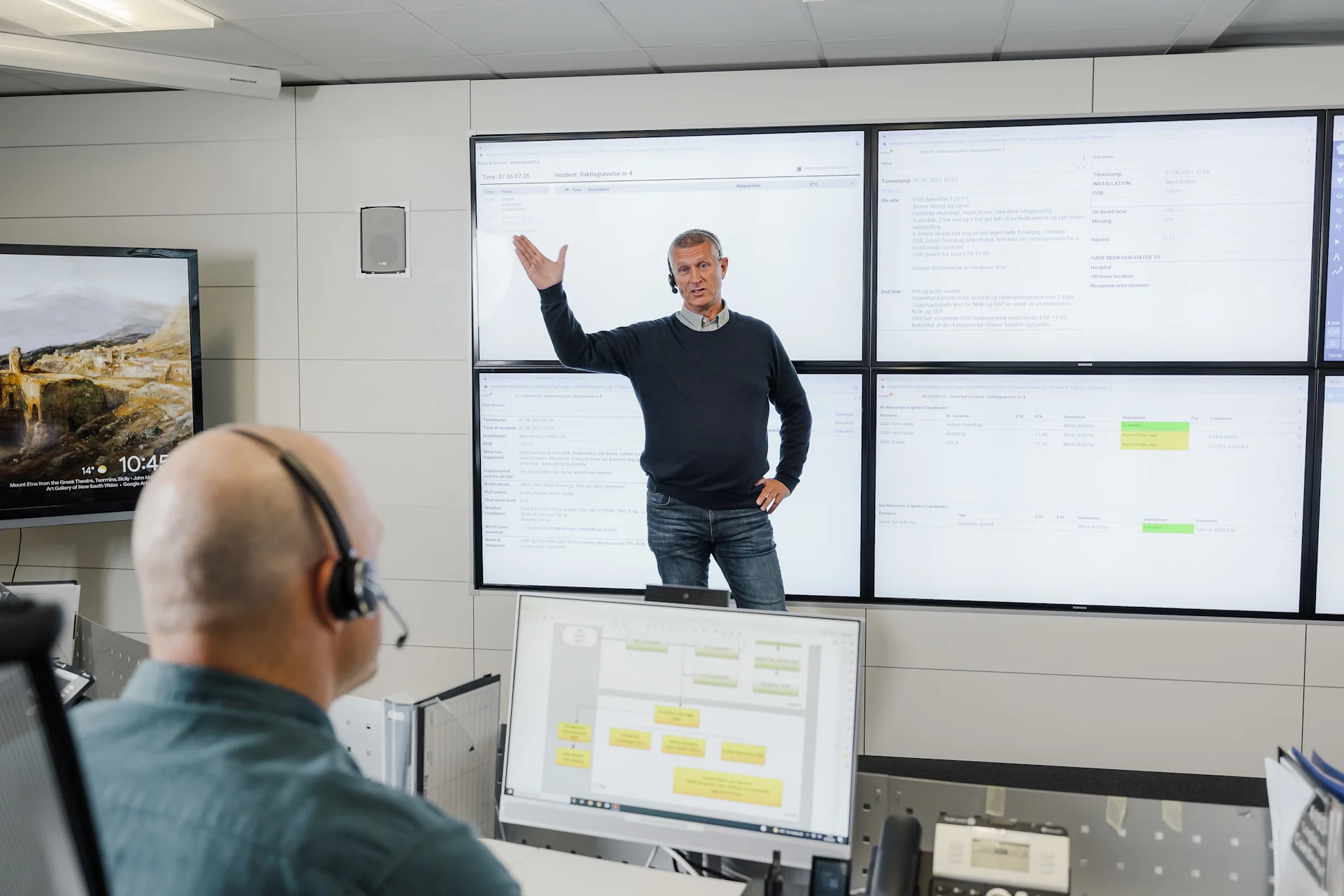
Bespoke and accredited training programmes
We offer accredited, customised training for emergency management, leadership, and crisis communication. Our programs include emergency assessments, stress training, on-site courses, investigations, next-of-kin communication, media training, stakeholder management, and leadership development. We also provide OPITO-approved courses like OIM Controlling Emergencies. Our goal is to ensure your team is well-prepared to handle any situation confidently and competently.

Incident Management System (ICS)
The Incident Command System (ICS) standardizes emergency response by unifying facilities, equipment, personnel, procedures, and communications. Transitioning to ICS involves training teams, adopting standardized procedures, establishing communication lines, integrating resources, and conducting joint exercises. Despite challenges like securing leadership support and providing training, the goal is to create a flexible, standardized structure for effective incident response, requiring patience and persistence.
Transitioning to an ICS
To transition to an ICS (Incident Command System), these teams would integrate their functions within the ICS framework, which provides a standardized approach to the command, control, and coordination of emergency response. ICS is designed to enable effective and efficient incident management by integrating a combination of facilities, equipment, personnel, procedures, and communications operating within a common organizational structure.
By following these steps, organizations can effectively transition from separate ERT, IMT, and CMT structures to a unified ICS, enhancing their ability to respond to and manage incidents of any size or complexity.
Training:
Ensuring that all ERT, IMT, and CMT members are trained in ICS principles and understand their roles within the ICS structure.
Standardization:
Adopting standardized management procedures that are consistent with ICS protocols.
Communication:
Establishing clear lines of communication and reporting hierarchies as defined by the ICS model.
Integration:
Combining the resources and capabilities of ERT, IMT, and CMT to function cohesively under the ICS framework.
Practice:
Conducting joint exercises to practice the implementation of ICS and refine the integration process.
Evaluation:
Regularly assessing the effectiveness of the ICS implementation and making necessary adjustments to improve performance and readiness.
Common Challenges in Implementing the ICS
Implementing the Incident Command System (ICS) can present several challenges for organizations. The goal of ICS is to provide a flexible, yet standardized structure that enables organizations to respond to incidents effectively and efficiently. It may take time for everyone to fully understand and embrace this system, but with patience and persistence, it can become a valuable tool for your organization.
Some of the common challenges include:
Leadership Support:
Strong support from leadership is crucial. Leaders should communicate the benefits of ICS and how it can improve the organization’s response to incidents.
Training:
Provide comprehensive training to all staff members. This should include both the theoretical aspects of ICS and practical exercises to demonstrate its application.
Clear Roles and Responsibilities:
Clearly define the roles and responsibilities within the ICS structure. Everyone should know their role and what is expected of them during an incident.
Regular Drills:
Conduct regular drills to practice the implementation of ICS. This helps to identify any gaps in understanding and gives staff the opportunity to become more comfortable with the system.
Feedback and Improvement:
Encourage feedback from all staff members and make continuous improvements to the system based on this feedback.
Resource Allocation:
Ensure that adequate resources are allocated to support the implementation and maintenance of the ICS, including personnel, equipment, and technology.

Crisis Management Consultancy Services
Our consultancy services include producing, verifying, and reviewing ER plans, creating and verifying ER operational documentation, and developing business contingency planning procedures and documentation. We also handle the planning, execution, and evaluation of training and exercises, provide evaluation reports, and develop training strategies. Additionally, we offer customized ER/CM solutions and projects tailored to clients' needs.