Digital Transformation in Maritime Learning: what we are getting right and what we are getting wrong
January 2026

This article was originally written for Maritime Information Services. View the article here.
When we talk about digital transformation in maritime learning, we usually start with tools: virtual reality (VR), simulators, e-learning platforms, and lately AI. But is real transformation happening because of those tools? Or does it lie deeper, in the psychological safety digital tools create for trainees? Let’s unpack this thought.
The shipping industry is one of the few in which people are expected to perform flawlessly in conditions that are dangerous, complex, and even hostile. At sea, hesitation can mean loss of life, ship, cargo and in some cases pollution. Yet, paradoxically, many maritime professionals are trained in environments that do not allow them to be unsure, to experiment, or to make mistakes. And this, along with other structural issues encountered in Maritime Education and Training (MET), creates a tension on how competence is developed. People are more than often certified before they are confident, and sometimes even before they are competent. Nevertheless, certification is not inherently equal to competence. Put simply, having a driver’s license does not automatically mean you are a good driver.
Immersive digital learning, and particularly simulation, has the potential to change this. But this can only happen if it is designed as a learning system rather than treated as another fancy “gadget”.
From knowing to being able to act
Research in experiential learning and simulation has long shown that people learn most effectively when they actively engage with realistic situations rather than passively absorb information (Kolb, 1984; Gaba, 2004; Chernikova et al., 2020). This is the basis for immersive learning environments. In such settings, learners experience not only how something works, but also how their choices have consequences. Immersive learning therefore matters not because of its novelty, but because it allows learners to act rather than only observe. This, in turn, changes how they relate to risk.
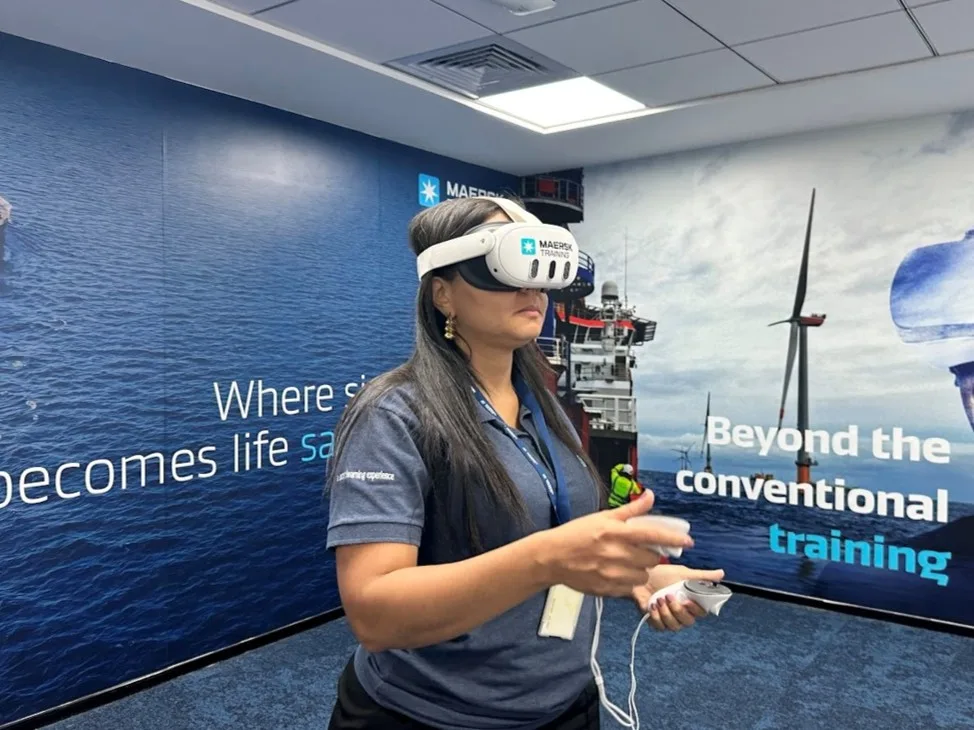
One student who participated in our VR-enabled safety and ship-familiarisation programme at Gujarat Maritime University described it this way:
“These are the things that are not taught in books always… in VR you learn where is the lever and where to put it. It is easier to understand and to learn.”
This encapsulates a critical transformation: from abstract knowledge to embodied understanding. Learners begin to recognise spaces, equipment and hazards in ways that resemble real work rather than abstract diagrams. This supports what Bandura (1997) described as self-efficacy, the belief in one’s capability to successfully perform the actions required in a given situation. In safety critical environments, this belief is as vital as knowledge. So essentially, learners leave feeling more capable, better equipped and more willing to engage with challenging situations.
Psychological safety is the real currency of digital learning
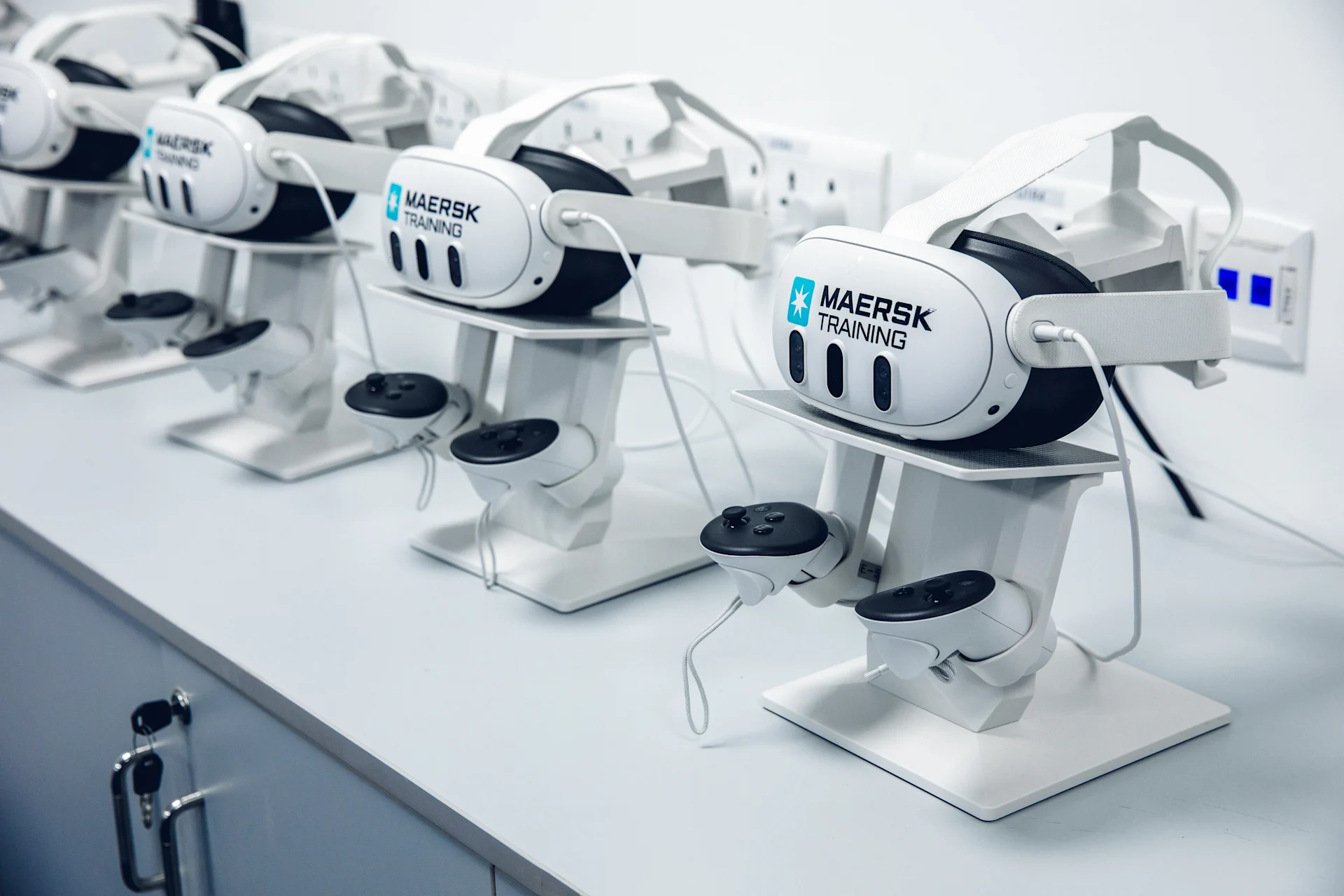
What makes immersive learning powerful is not the technology itself, but the learning environment it creates. In well-designed simulation environments, learners are given the “freedom to fail” (Kim et al., 2021). They can try, be wrong, reflect and try again without the fear of causing real-world harm.
Students from the GMU programme, that I mentioned earlier, repeatedly referred to confidence and participation. One noted:
“Now we understand. We can connect the story. And we feel confident because in a conversation we also know things. We can also contribute.”
This kind of response is a marker of psychological safety. Learners feel permitted to speak, to ask questions and to acknowledge uncertainty. In organisational psychology, this is known to be essential for learning, safety and retention. People do not leave demanding industries simply because the work is hard. They leave when they feel exposed, unprepared and unsupported from management.
From a workforce perspective, immersive learning then functions as a retention and risk management tool. It can reduce the silent anxiety associated with being placed in these complex environments without sufficient rehearsal.
Technology does not create safety. Learning design does.
At this stage, it is necessary to clarify a common misconception. VR, simulators and digital platforms do not produce better learning by default. Without structured scenarios, facilitation, feedback and reflection, immersive environments can create confusion or even a false sense of competence.
As Gaba (2004) noted, simulation is a “technique, not a technology”. Its effectiveness is dependent on how learning activities are designed, guided and assessed. A poorly designed VR exercise can feel like a game. A well designed one becomes a serious rehearsal space for professional judgement. That, however, comes down to whether learning methodologies and taxonomies have been considered from the outset.
This distinction matters greatly for digital transformation strategies. When organisations choose to invest in platforms without investing in instructional design and competence frameworks, they just end up with expensive but shallow learning experiences.
Why this matters for the future maritime workforce
Maritime organisations are facing simultaneous pressures: decarbonization demands, digitalization and concurrently, a new generation of professionals is entering the industry with different expectations about learning and development.
Simulation allows risk to be moved away from live operations and into learning environments. It allows people to train on technologies that might not yet be widely deployed. It allows mistakes to happen where they are productive rather than dangerous. And it creates space for learners to ask questions and seek clarification in areas they might not yet fully understand. This is what psychological safety in learning looks like.
But this potential is only realised when digital learning is treated as part of a human capital strategy rather than a technology rollout.

References
Bandura, A. (1997) Self-Efficacy: The Exercise of Control. New York: W.H. Freeman.
Chernikova, O., Heitzmann, N., Stadler, M., Holzberger, D., Seidel, T., & Fischer, F. (2020). Simulation-Based Learning in Higher Education: A Meta-Analysis. Review of Educational Research, 90(4), pp. 499-541.
Gaba, D.M. (2004). The future vision of simulation in health care. Quality and Safety in Health Care, 13(Suppl 1), pp. i2–i10.
Kim, T., Sharma, A., Bustgaard, M., Gyldensten, W.C., Nymoen, O.K., Tusher, H.M. and Nazir, S. (2021). The continuum of simulator-based maritime training and education. WMU Journal of Maritime Affairs, 20(1), pp.135–150.
Kolb, D.A. (1984). Experiential learning: experience as a source of learning and development. Englewood Cliffs, NJ: Prentice Hall.