Safety from day one in Power-to-X
February 2026


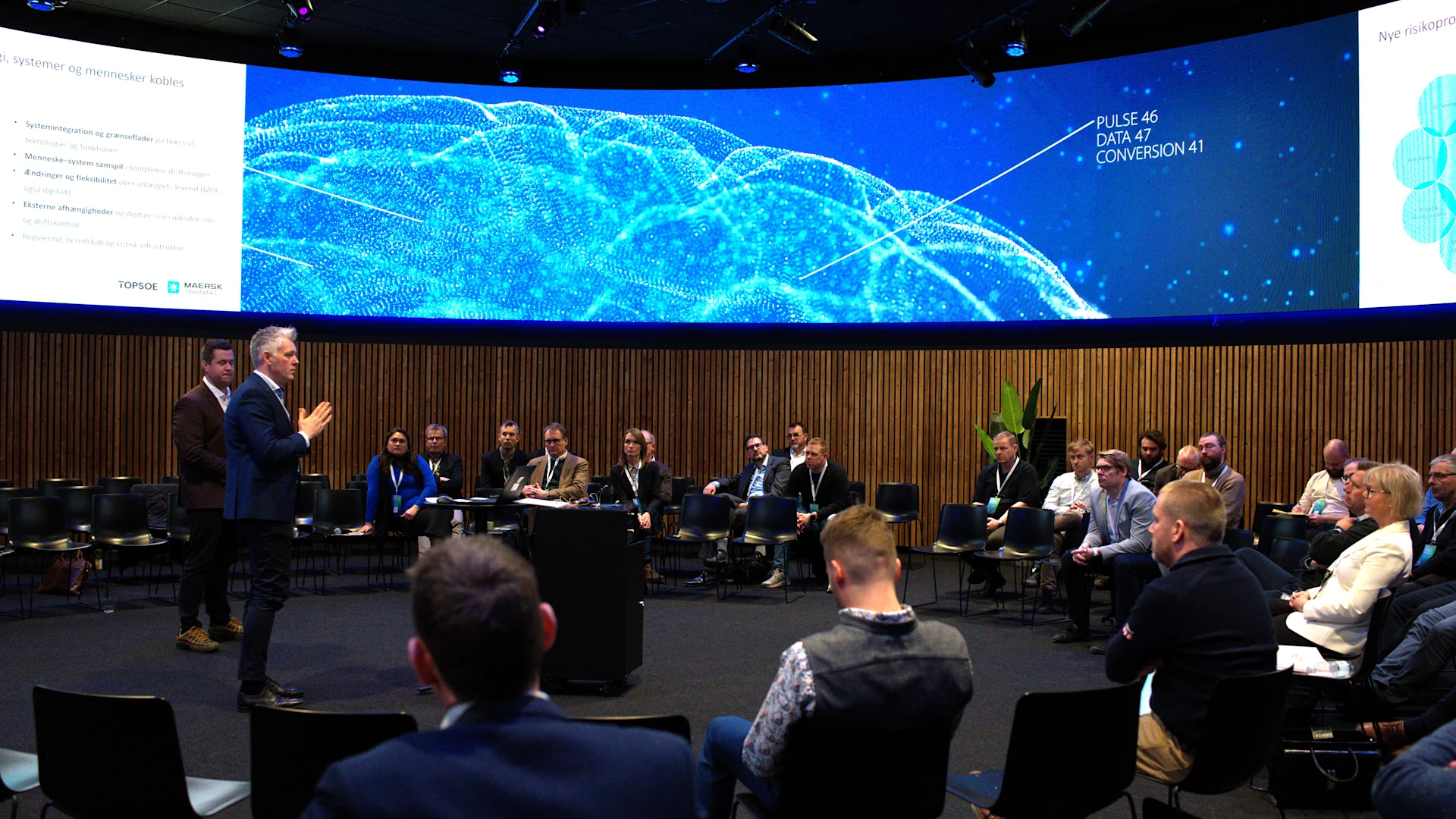
At the recent annual Power-to-X conference, hosted by the GTS – Godkendt Teknologisk Service institutes, I had the opportunity to speak about the work we are doing with Topsoe.
The industry is still developing and maturing. It is moving from pilots and early commercialisation to two- and three-digit megawatt projects, with gigawatt-scale facilities close behind. As scale increases, safety culture and workforce competence must grow with it.
Building on what we have seen working for decades in traditional energy and chemical sectors, and with an adoption to fit the complexity and specific risk of Power-to-X. This requires strategic workforce development and a program built for the industry to be safe and efficient.
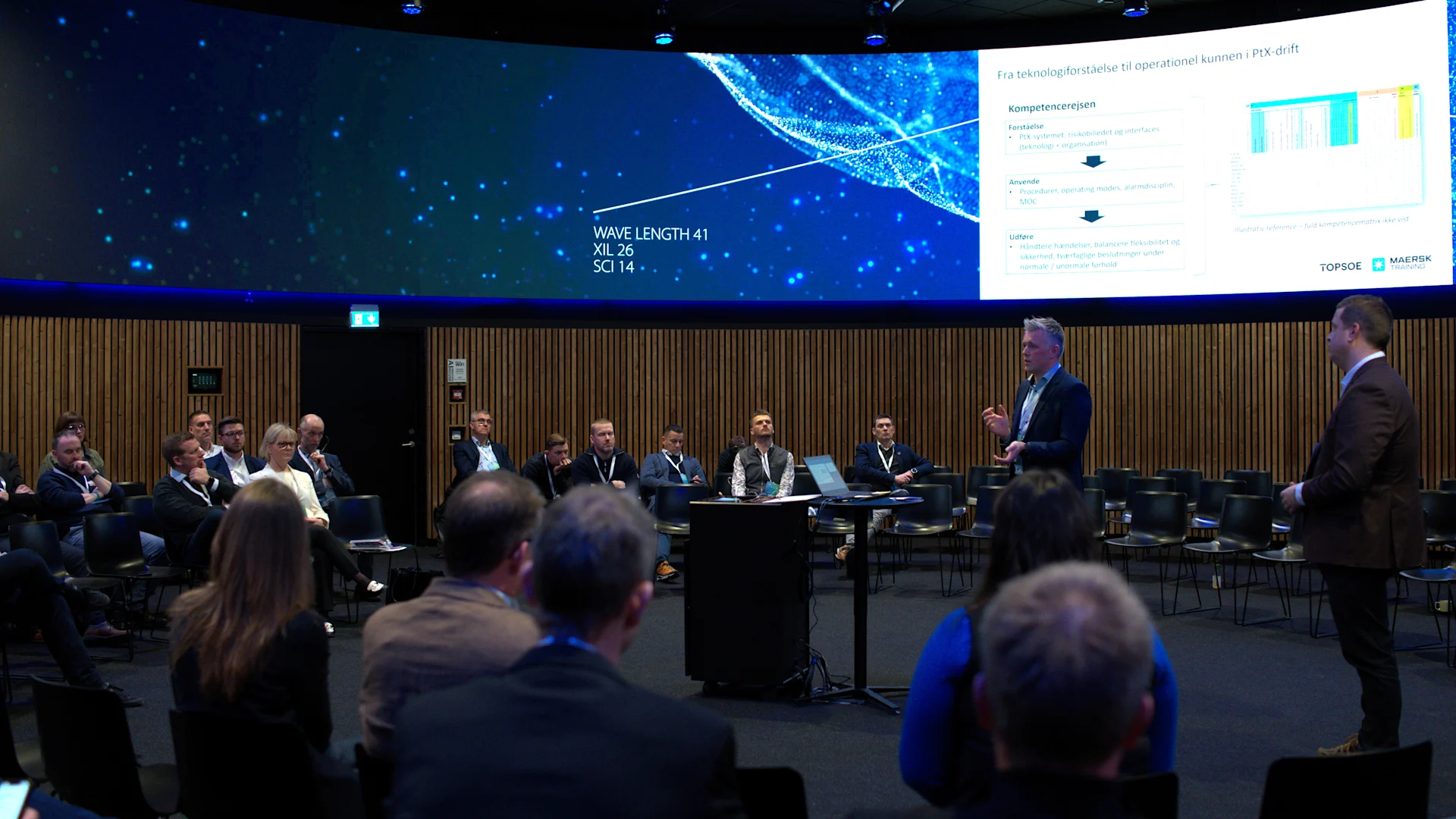
Co-presenter Anders Noer (Topsoe) and I emphasized one key point. Training needs to scale in parallel with the industry and cannot rely on one-size-fits-all thinking. We need to design learning around the full lifecycle of Power-to-X operations, supported by shared ecosystems and industry collaboration, where collective safety takes priority over competition.
Why early safety frameworks are needed to scale PtX responsibly
Power-to-X is a key enabler in the green transition, turning renewable energy into chemicals and fuels like hydrogen, ammonia, and methanol. As Power-to-X scales from pilot plants to industrial operations handling hydrogen, ammonia, and methanol, one uncomfortable question must be asked.
Will we design safety into the industry now, or wait until the first major incident forces our hand?
At Maersk Training, we’ve seen this before. New industries often develop safety cultures only after accidents happen. But with Power-to-X, we have an opportunity to do things differently and build on learnings from other high-risk industries.
That’s why we’ve partnered with Topsoe, a global leader in Power-to-X technology, to embed safety into the industry from the very beginning. Together, we aim to set the first global PtX safety training standard, ensuring safety isn’t an afterthought, but the foundation for success.
Because when it comes to safety, learning by doing is not an option.
Lessons from the past show why safety must come first
Industries either build a safety culture proactively or they wait until a crisis forces them to.
In 1977, the drilling rig Maersk Explorer suffered a blowout and caught fire. The crew had been trained and certified to comply, but in the chain of events leading up to the incident and the moment of crisis, the emergency response organisation collapsed under pressure, and several severe gaps in actual competencies became clear.
We were lucky; no one was killed or seriously injured. But luck is not a safety strategy, and we have since then approached safety strategically and proactively.
That incident led to the creation of Maersk Training in 1978, built on the belief that embedding behaviour and attitude with technical training, and training closer to real conditions, build a stronger safety culture and more resilient organisation from day one, and ensure people are prepared for the reality they need to be ready to handle, should an event occur – thus ensuring they are competent and confident, not just compliant. Since then, we've helped industries such as offshore wind, shipping, ports, infrastructure, and oil and gas create structured, proactive safety frameworks focused on technical skills and human factors.
Safety is in our DNA, and the lesson from the incident is universal: when systems are new, unfamiliar, and under pressure, training and preparedness determine outcomes. Not procedures on paper. That is exactly the situation the Power-to-X industry faces today, and the approach we will bring into Power-to-X training.
A partnership to build a safer industry
Power-to-X has significant potential as a key component in decarbonising society and enhancing energy security, but without a structured approach to safety training and culture from the start, we risk fragmented practices, regulatory confusion, and companies learning through trial and error.
We are industry leaders in developing impactful training for high-risk sectors, and we understand that safety isn’t solely about compliance. It’s about cultivating a workforce that is skilled, prepared, and confident in high-risk settings. We also recognise that making training relevant and directly applicable requires a deep understanding of the technology in use and industry-specific insights into how work is performed.
Together with Topsoe, we bring a unique set of strengths to ensure top-quality workforce preparation and a vision of this being a vital enabler for PtX to scale safely, responsibly, and cost-effectively through closer industry collaboration.
We are developing the first structured safety competency framework for PtX operations, ensuring training is embedded in plant design and operations from day one, and creating a shared safety culture across the industry so we can grow on a solid foundation of safety, training, and workforce competence. Our ambition is not to create a proprietary solution, but to help establish a shared, industry-wide safety baseline that others can build on.
What comes next?
In offshore wind, we have collaborated with Global Wind Organisation (GWO) on developing safety training standards that replaced fragmented local practices and OEM-specific training, and now are the industry benchmark. The opportunity for Power-to-X is even greater.
By embedding safety into PtX today, we are not just protecting workers. We are making the industry safer, more scalable, and more attractive to investors.
The question is not if safety will become a priority. The question is when. The best time to act is now.